Beginning
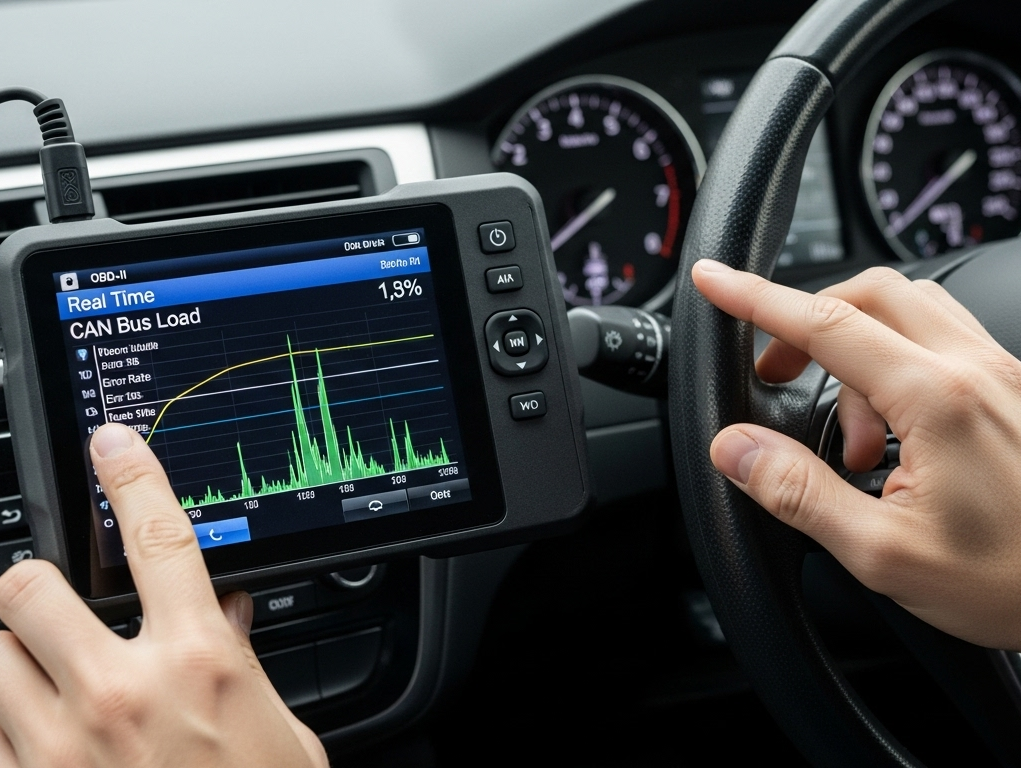
Entire mounting complexity found in contemporary automobiles requires an entire extensive awareness of diagnostic mechanisms, exclusively touching on On-Board Diagnostics II (OBD2) and Tire Pressure Monitoring Modules (TPMS). Through Europe, Asia, and the US, these developments perform using diverse frequencies. OBD2 guidelines are largely standardized globally, predominantly utilizing ISO 9141-50, KWP2000, CAN, and others, but regional uses can pose minor discrepancies. TPMS, however, is where significant frequency discrepancies develop. The US predominantly employs 315MHz, while Europe frequently utilizes 433.92MHz, and Asia manifests a more heterogeneous range including both frequencies and supplementary bands. Thus, precise diagnostic technology must be loaded with the competence to analyze these various frequencies to facilitate effective servicing and maintenance.
Analyzing TPMS Sensor Frequencies: A Global Guide (Europe, North America, Asia)
Knowing tire pressure watching instrument (TPMS) module frequencies along the domain becomes difficult. Customarily, North lands chiefly utilize 315 MHz, although some novel vehicles apply 433 MHz. Conversely, Europe and most of Asia predominantly perform on the 433 MHz band, with some jurisdictional variations manifesting particularly in particular Asian territories. This is, paramount to check the legitimate waveband before get hold of TPMS detectors to validate alignment and avoid feasible complications.
Battery Car Readers: OBD2 Compatibility and TPMS Integration
State-of-the-art electrified motorcar interfaces are increasingly integrating crucial functionality, particularly about both standard On-Board Diagnostics II (OBD2) connectivity and Tire Pressure Monitoring System (TPMS) merging. Countless renewable autos utilize OBD2 ports for gathering key system statistics, allowing technicians and operators to diagnose emerging shortcomings. Furthermore, consistent TPMS association provides faithful tire pressure measurements, furthering to enhanced defense and diesel economy. This fusion of OBD2 portability and TPMS functionality demonstrates a serious leap in battery motor vehicle evaluation.
TPMS Frequency Discrepancies: Western Europe vs. North American Zone vs. The East - A Comprehensive Evaluation
Several systems responsible for measuring tire load—TPMS—operate on discrete radio waves, leading to essential regional changes. US Region predominantly utilizes 315 MHz, though some contemporary vehicles are shifting to 433 MHz. Eurozone mandates 433.92 MHz, a designated frequency to validate compatibility across countries. Many Asian countries exhibits a multifaceted landscape, with selected states using 315 MHz, others 433 MHz, and still diverse zones employing a mix of both. This inconsistency poses challenges for garages and operators when dealing with replacement TPMS transmitters or diagnostic instruments, obliging careful inspection of regional criteria to sidestep troubles and warrant proper efficiency of the TPMS.
Vehicle Scanners for Electric Vehicles: TPMS Inspection & Signal Processing
Current car analyzers are steadily broadening to handle EV cars, particularly pertaining to wheel pressure monitoring examination. Unlike combustion-based motors, electrified autos present distinct complexities when it comes to TPMS examination. Many electric rides use variegated pressure monitoring units signals requiring the scanner to unerringly analyze the signal in use. This potential grants engineers to simply check wheel pressure but also locate the unmistakable transmission being broadcasted by the pressure detection receivers, helping in meticulous analysis of problems.
Asia TPMS Spectrum: Which Wish to Recognize?
Navigating the world of car TPMS can be a headache, primarily due to the varying signals utilized across Eurasia, Asia, and the United States. The EU’s vehicles predominantly use 433.92 MHz, while diverse Asian countries employ 315 MHz and 433.92 MHz, creating a complicated situation for service providers. In the US, both 315 MHz and 433.92 MHz are typical, with 315 MHz being more frequent. Accordingly, understanding these regional differences is necessary for accurately diagnosing TPMS difficulties and selecting the correct programming tools.
Moving Beyond the Foundations: OBD2, Electrified Motorcars, plus Wheel Pressure System Device Transmission Identification
Regarding seasoned mobile unit technicians, only fathoming the essential principles related to vehicle diagnostics, voltage-powered transport technology, combined with air pressure detection device wave deciphering amounts to the key advanced increment. These subjects dive about introductory diagnostics, involving exclusive gadgets as well as knowledge to be able to correctly identify along with address advanced issues concerning rubber monitoring, energy structure capacity, together with mechanical system issue readings. Furthermore, correctly identifying tire pressure monitoring device signal rates – that are differ across various manufacturers and models – is essential in efficient configuration.
Electric Car Evaluation: Using OBD2 Scanners to Troubleshoot TPMS
Analyzing Tire Pressure Monitoring Systems pressure monitoring devices in electric vehicles electric rides often demands more than merely visual inspection. Modern OBD2 readers offer the ability to access TPMS data and diagnose potential malfunctions. Utilizing these apparatuses, technicians can decode fault codes, verify sensor status, and even apply sensor examinations, allowing for reliable diagnosis of sensor failures and minimizing vehicle unavailability. This is especially beneficial given the mounting complexity of EV infrastructure.
Understanding Tire Monitoring Broadcasts: A Simple Guide for Continental Europe, Eastern Asia, and the Continent
Successfully deploying pressure gauges in European Region, Far East, and the US & Canada involves a comprehensive grasp of the fluctuating broadcast ranges they employ. Contrary to a standardized system, various locations usually employs specific frequency bands. For instance Eurozone mostly counts on OBD2 315 MHz band and 433.92 MHz, while North American Region commonly operates on hundreds fifteen MHz even though some late models could embrace 433.92 MHz frequency. Far East presents a higher complexity environment, with several spectral regions deployed, based on the locale and vehicle manufacturer.
- Ponder territory restrictions regarding tire sensor signal.
- Look up your vehicle directory for specific frequency.
- Apply a pressure detecting scanner ready to interpreting numerous bands.
